Anastasio, Bijsterbosch, Marcus Named Distinguished Investigators
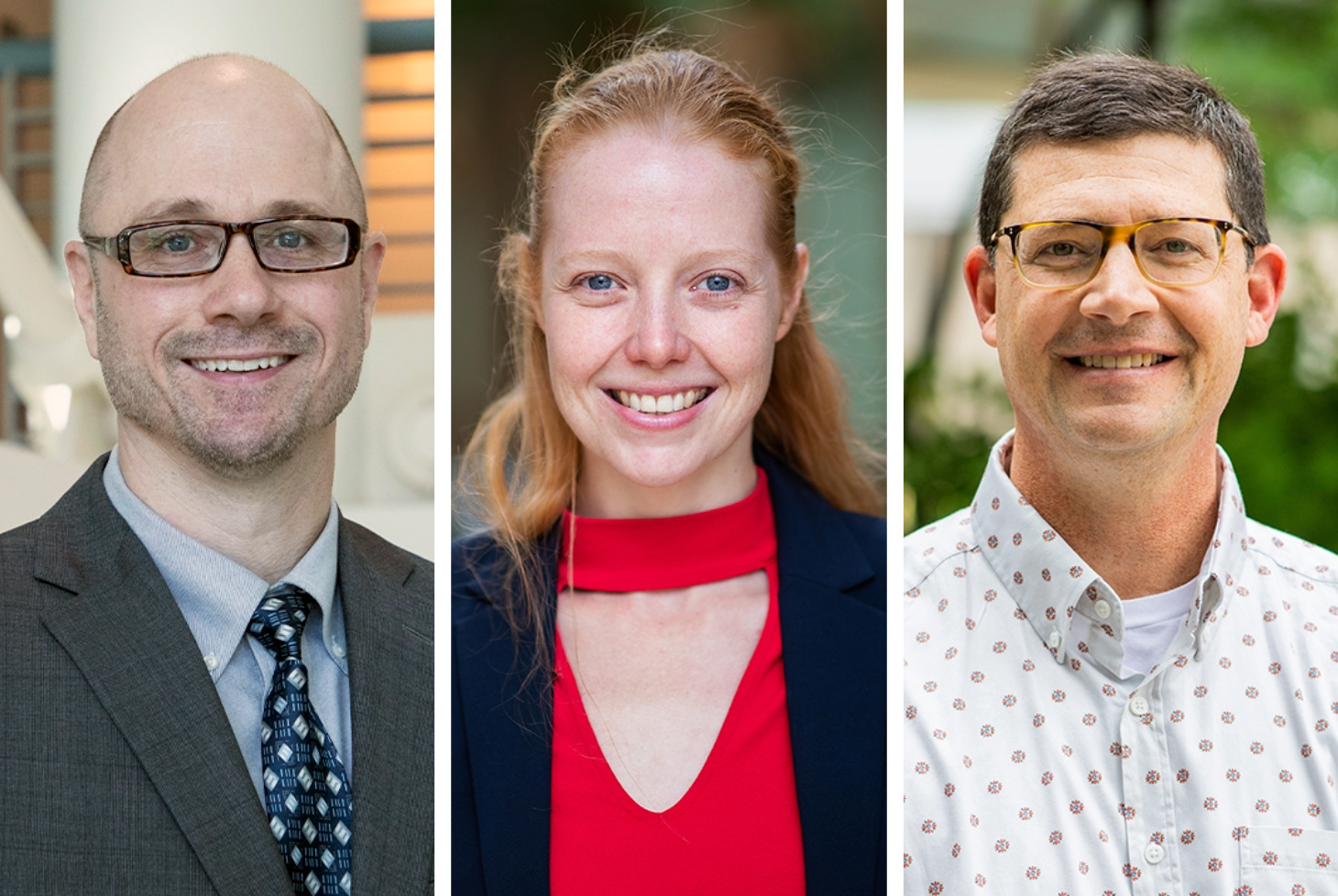
Three faculty members from WashU Medicine Mallinckrodt Institute of Radiology (MIR) were selected to join the Academy for Radiology & Biomedical Imaging Research’s Council of Distinguished Investigators. This honor recognizes individuals from academic and industry institutions for their outstanding contributions to medical imaging.

Mark A. Anastasio, PhD, is the R. Gilbert Jost Distinguished Professor of Imaging Sciences and Artificial Intelligence and the vice chair for imaging sciences and AI research. He directs the Computational Imaging Research Center (CIRC) and is the founding director of the Center for Computational and AI-Enabled Imaging Sciences (C2AIS), leading efforts to develop and apply advanced computational methods and AI for biomedical imaging across scales — from single-cell multi-omics to human imaging and clinical data. Jointly supported by both WashU campuses, the C2AIS catalyzes the development of integrative methods to better develop a “systems biological” approach for the study and precise treatment of various forms of human disease.
Anastasio is a fellow of the Institute of Electrical and Electronics Engineers (IEEE), SPIE and American Institute for Medical and Biological Engineering. He received the 2025 IEEE Engineering Medicine & Biology Society’s William J. Morlock Award for his contributions to image reconstruction and biomedical imaging technology development.
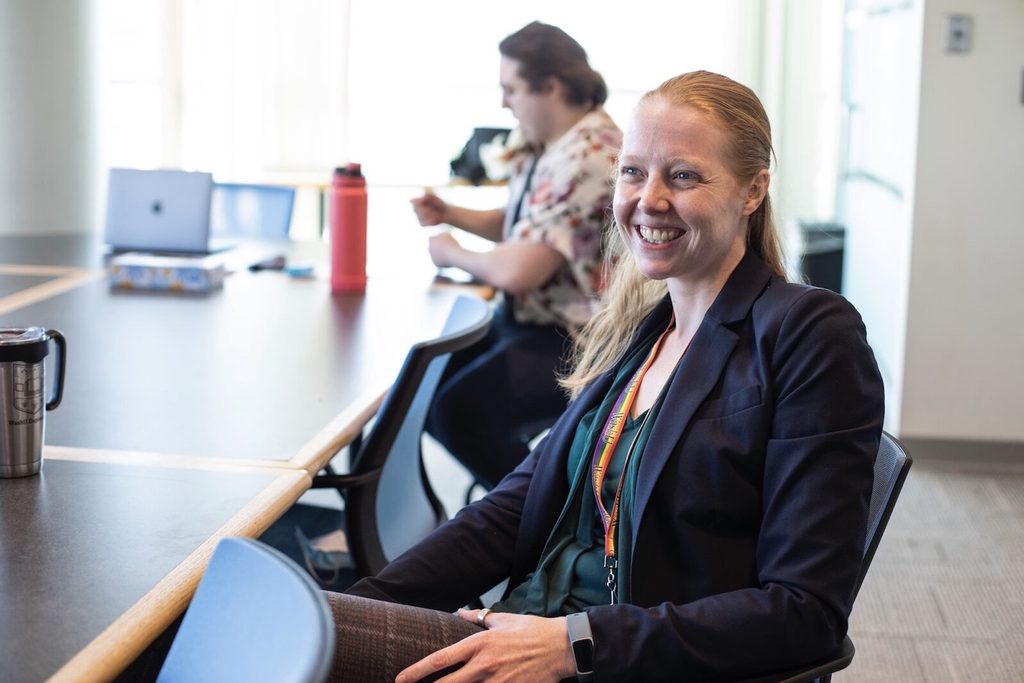
Janine D. Bijsterbosch, PhD, is an associate professor of radiology and a principal investigator in the CIRC. Her work in the Personomics Lab aims to understand how brain connectivity patterns differ from one person to the next, by studying the “personalized connectome” and leveraging her multidisciplinary background in advanced computational MRI analysis tools and experience in clinical applications such as depression and anxiety. Using population datasets such as the UK Biobank, the lab adopts cutting-edge analysis techniques to study functional connectivity networks and their role in behavior, performance, mental state, disease risk, treatment response and physiology.
An advocate for open science, Bijsterbosch serves as editor of open data replication reports for the NeuroImage family of journals, as well as chair of the Open Science Special Interest Group with the Organization for Human Brain Mapping. She is also involved with international teaching efforts as co-chair of the FSL Course Organizing Committee and lead author of a textbook on functional connectivity analyses.
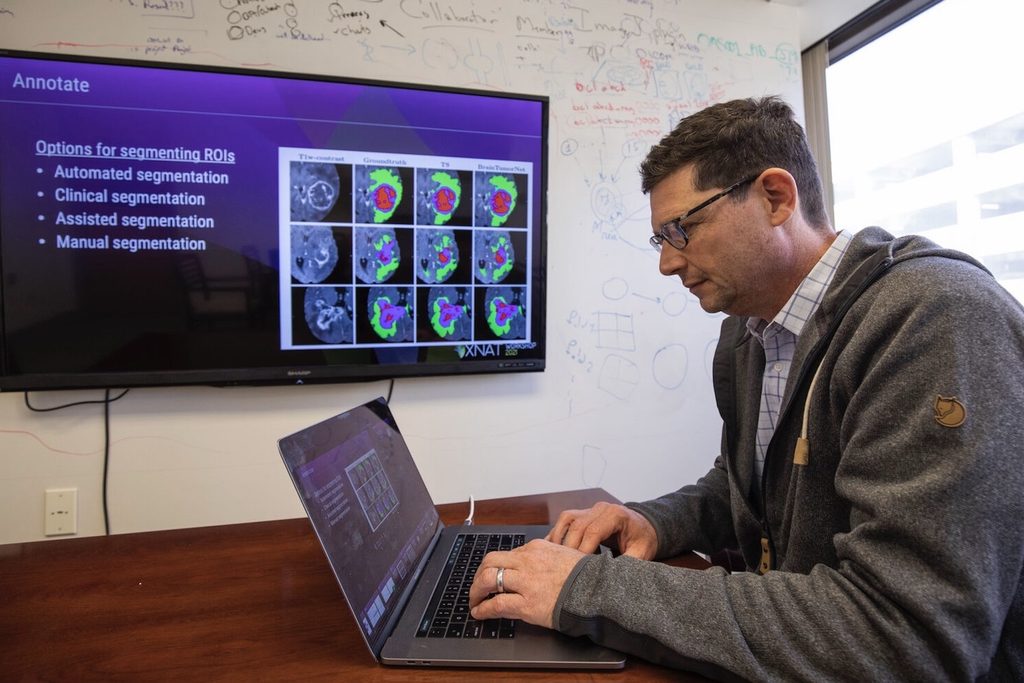
Daniel S. Marcus, PhD, is a professor of radiology and director of the Neuroinformatics Research Group (NRG) based in the CIRC. He and his colleagues build imaging informatics and analysis tools with a particular focus on neuroimaging. The NRG has developed the XNAT imaging informatics platform, an open-source software platform used to manage and share neuroimaging and related data in facilities around the world. He previously served as CIRC director.
Marcus directs several service cores at the university, including for the Alzheimer’s Disease Research Center, the Intellectual Developmental Disabilities Research Center, and NINDS Center Core for Brain Imaging. He’s also an investigator in several NIH-backed initiatives to develop a national informatics infrastructure, including the Biomedical Informatics Research Network, the National Alliance for Medical Image Computing and Informatics for Integrating Biology and the Bedside.
Anastasio, Bijsterbosch and Marcus will be honored during an in-person ceremony at the Radiological Society of North America’s 112th Scientific Assembly and Annual Meeting in Chicago.
Learn more about the Council of Distinguished Investigators from the Academy for Radiology & Biomedical Imaging Research.