

WashU Medicine Mallinckrodt Institute of Radiology (MIR) is establishing a center dedicated to developing AI-based imaging tools to improve the diagnosis and precision treatment of cancers, cardiovascular disease, neurological diseases and numerous other conditions. The Center for Computational and AI-Enabled Imaging Sciences (C2AIS) brings together collaborators from across WashU Medicine and others from WashU’s McKelvey School of Engineering.
“MIR has long been a national leader in developing innovative imaging technologies, from the invention of positron emission tomography to today’s AI applications in diagnostics and image analysis, and this new center represents an ambitious expansion of our capability,” said Director Pamela K. Woodard, MD. “Integrating AI into imaging will enhance how we diagnose disease, predict its progression and tailor treatments to the unique needs of each patient.”
The new center will help advance AI-driven imaging technologies, such as two recently developed at WashU Medicine — in collaboration with MIR — that are being commercialized. One tool can analyze mammograms to predict an individual patient’s risk of breast cancer over the next five years. Another rapidly maps the brain to help neurosurgeons plan delicate surgeries and avoid sensitive areas that control speech, movement and cognitive function. The center will be a hub for expertise in image analysis that uses sophisticated computing tools to find patterns in datasets of millions of medical images and de-identified patient records, providing insight on both the progression and the potential treatment of disease. The center will also support training on these tools for clinicians and researchers.
C2AIS joins a growing WashU ecosystem of collaborative AI initiatives that are helping to shape the future of medicine. The new center will primarily focus on developing AI-based medical imaging applications that integrate information from different imaging types — ranging from digital microscope images of cells to MRI scans to X-rays — to identify clinically informative connections between them. This may include identifying previously unknown early indicators of disease onset that could allow for more effective clinical interventions. The center will bring together AI imaging experts and researchers from across the Medical Campus, including Siteman Cancer Center and from the Departments of Medicine, of Neurology, of Psychiatry and of Radiation Oncology.
C2AIS will house information from the imaging databases of all the participating departments, collectively representing a range of imaging modalities across many different types of disease. The AI-powered tools developed from those large datasets will enable increasingly precise diagnosis for individual patients, Woodard said. “Institutions with leading academic medical centers that unite medical data, clinical expertise and advanced AI research will lead the next revolution in healthcare,” said Mark Anastasio, PhD, director of C2AIS and a recognized expert in computational imaging science and AI for imaging applications. “WashU is exactly such an institution and an ideal home for this center that will enable us to build a community to drive innovation that advances patient care in ways few other institutions can achieve.”
Mark Anastasio, PhD: New Role, Big Vision
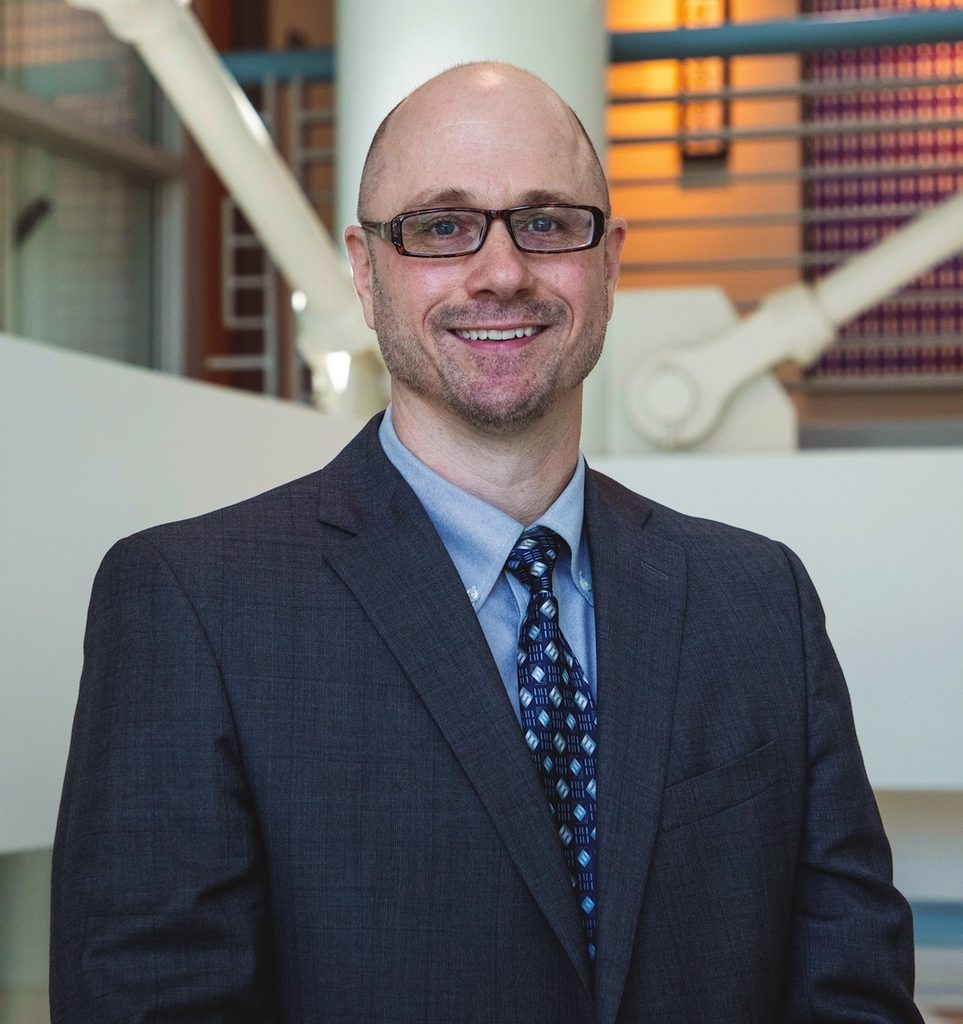
Mark A. Anastasio, PhD, joins WashU as MIR’s R. Gilbert Jost Distinguished Professor of Imaging Sciences and Artificial Intelligence and vice chair for imaging sciences and AI research. He also serves as a professor of electrical & systems engineering in McKelvey Engineering. Anastasio previously served as head of the Department of Bioengineering at the University of Illinois Urbana-Champaign for six years.
As part of the efforts to build community among AI innovators at WashU and with its partners, Anastasio joins the leadership team of the Oncologic Imaging Program at Siteman Cancer Center and was named the Pedal the Cause Professor. He is also the associate chief research information officer for biomedical imaging at the Institute for Informatics, Data Science & Biostatistics (I2DB), where he works with institute director Philip R.O. Payne, PhD, the Janet and Bernard Becker Professor of Medicine.
Published in Focal Spot Spring/Summer 2026 Issue