Nuclear Medicine
The primary goal of this ACGME-accredited residency is to train radiologists and physicians of diverse backgrounds to become the next generation of leaders in academic and clinical nuclear medicine. The length of the program depends on each resident’s prior training. For example, one year of nuclear medicine training is required after completing an ACGME-approved radiology residency.
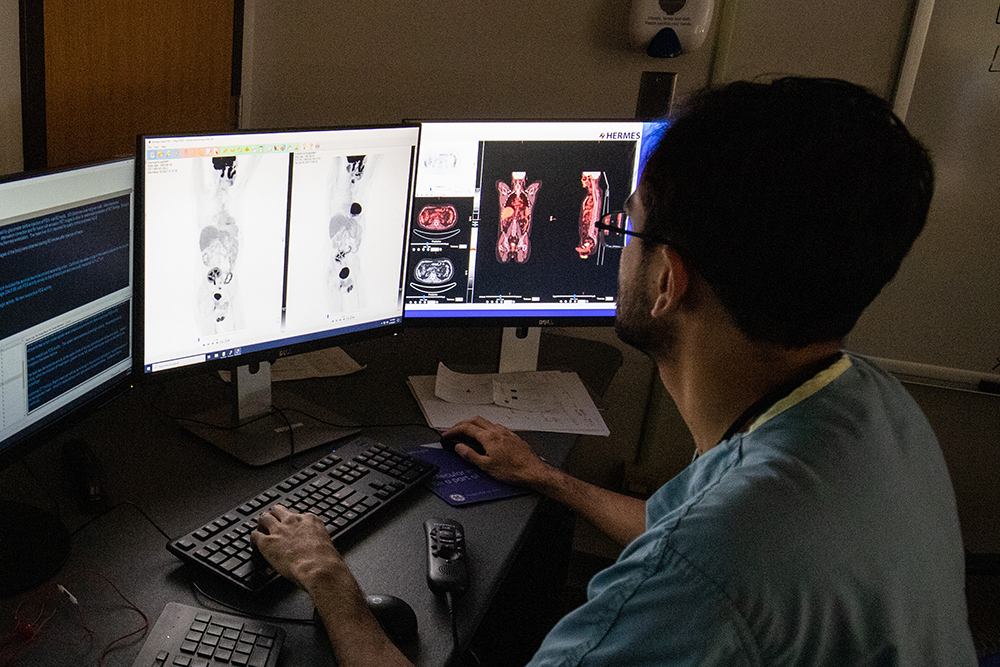
Trainees gradually assume increased responsibility in the clinical service while always working closely with an attending physician who reviews every case with them. Although diagnostic imaging is emphasized, extensive experience in radiopharmaceutical therapies (including radioiodine and parenteral therapies) is provided. The program offers training in innovative nuclear medicine technology, such as SPECT/CT, PET/CT and PET/MRI. In addition to general adult nuclear medicine service, the program features a nuclear cardiac imaging service, clinical PET/CT, pediatrics and theranostics service. Multiple opportunities are also available to participate in research projects related to new diagnostic and therapeutic radiopharmaceuticals.


No employees matched your search
- Six fellows are accepted into the program per academic year
- Research projects are highly encouraged and supported with mentorship
Home call weekly, split evenly among fellows throughout the year.
MIR is home to one of the most extensive repository of nuclear medicine cases in the world. Our goal is to provide a comprehensive resource for nuclear medicine residents and physicians in the interpretation of nuclear medicine studies.
MIR offers a wide range of helpful resources and competitive benefits for trainees.
Our four-year alternate pathway was created to allow international medical graduates (IMGs) to complete four years of radiology training and become eligible for certification by the American Board of Radiology (ABR). The required four years of training can be accomplished through a combination of annual training in the following programs: neuroradiology, nuclear medicine (two years of training is required), and pediatric radiology.
The ABNM-alternate pathway was created to allow international medical graduates (IMGs) who have trained in nuclear medicine outside of the United States to complete additional years of nuclear medicine training (typically 1-3 years) and become eligible for certification by the American Board of Nuclear Medicine (ABNM). Physicians who receive part or all of their residency training abroad may have their foreign training accepted as being equivalent to some of the training required in the United States and Canada by having their credentials formally reviewed by the ABNM. Upon acceptance to this pathway, the program director will initiate the process of requesting credential review by the ABNM.
If you are interested in applying nuclear medicine residency, please complete the application and provide the following documentation (PDF copies only; no JPGs allowed except for professional photo):
- Current CV
- Three letters of recommendation, including a letter from your residency or fellowship program director. Contact information should be a work address, no personal mail. Please address these to the program director.
- USMLE Score reports: We require successful completion of all USMLE Steps before an application may be considered for a potential pathway.
- Copy of ECFMG certificate
- Copy of medical school diploma
- Dean’s letter from medical school
- Medical school transcripts
- Personal statement
- Certificate of completion of residency, if applicable
Please note that WashU/BJH sponsors J-1 visas for trainees. We do not sponsor new H1-B visas for applicants from abroad but will extend an existing H1-B visa from another institution if a four-year pathway is offered to a candidate.
Please email all inquiries and application documents to program coordinator Bre Vittitow.
Bre Vittitow, Program Coordinator
314-362-2809
Program Director
Rosana Ponisio, MD
Associate Professor of Radiology
Nuclear Medicine
Our nuclear medicine physicians are known for their expertise, interpretation and innovation, and they continue to be at the forefront of PET clinical imaging and research, changing the way many diseases are treated.