C-TRACT Trial Finds Minimally Invasive Procedure Relieves Post-Thrombotic Syndrome Symptoms
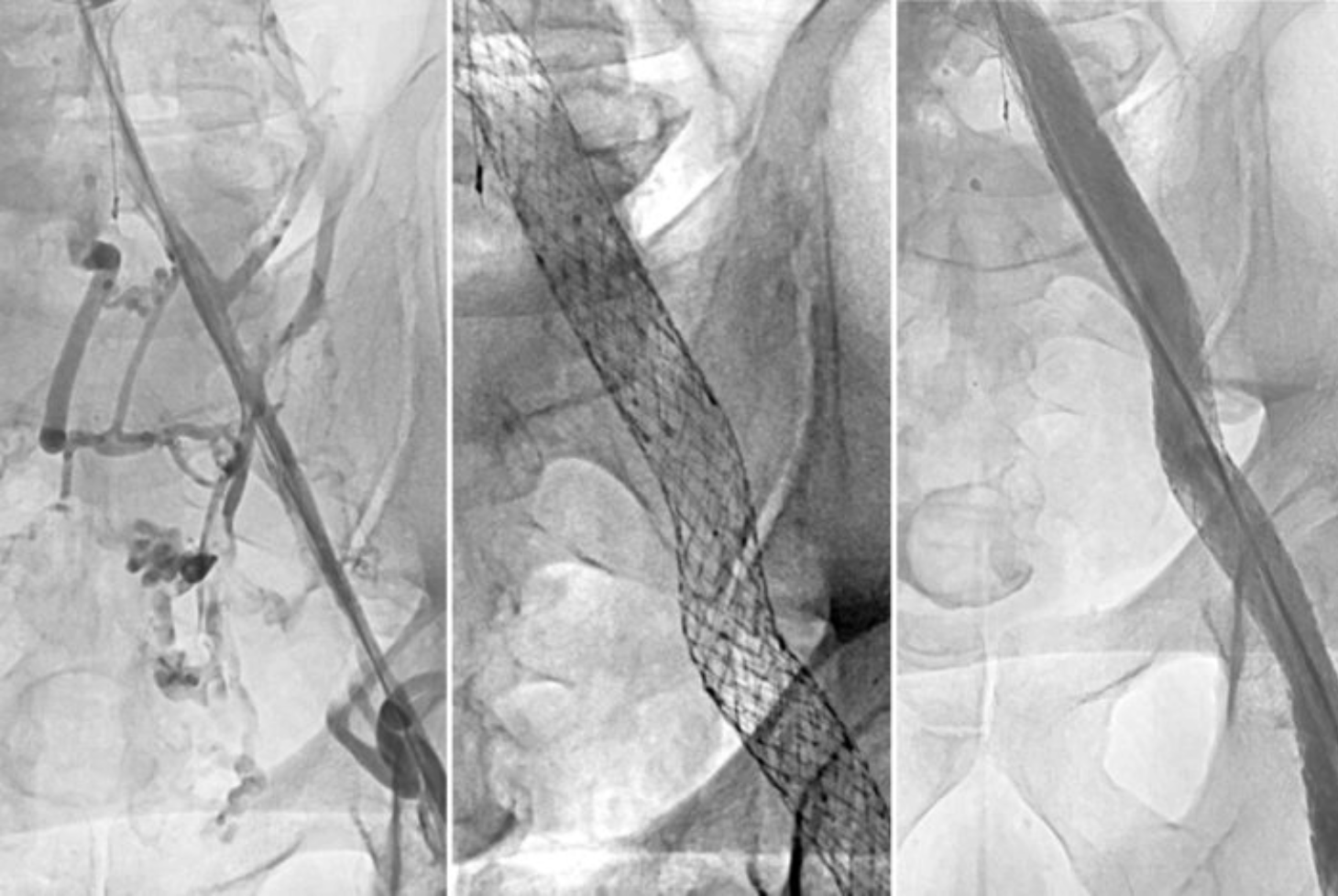
A narrowed vein in the thigh of a patient with severe post-thrombotic syndrome (left). A stent is placed in the vein (center), allowing better blood flow (right). Courtesy: Suresh Vedantham, MD.
More than 300,000 people in the U.S. are diagnosed with deep vein thrombosis each year, and an estimated 40% of survivors subsequently experience post-thrombotic syndrome. This common and painful complication can cause leg pain, swelling, skin discoloration and impaired mobility, but current treatments neither address the underlying blockage in the vein nor provide consistent long-term relief from the symptoms and disability. But new results from a major, multi-site clinical trial co-led by researchers at WashU Medicine Mallinckrodt Institute of Radiology (MIR), have shown that post-thrombotic syndrome can be effectively treated with a minimally invasive procedure.
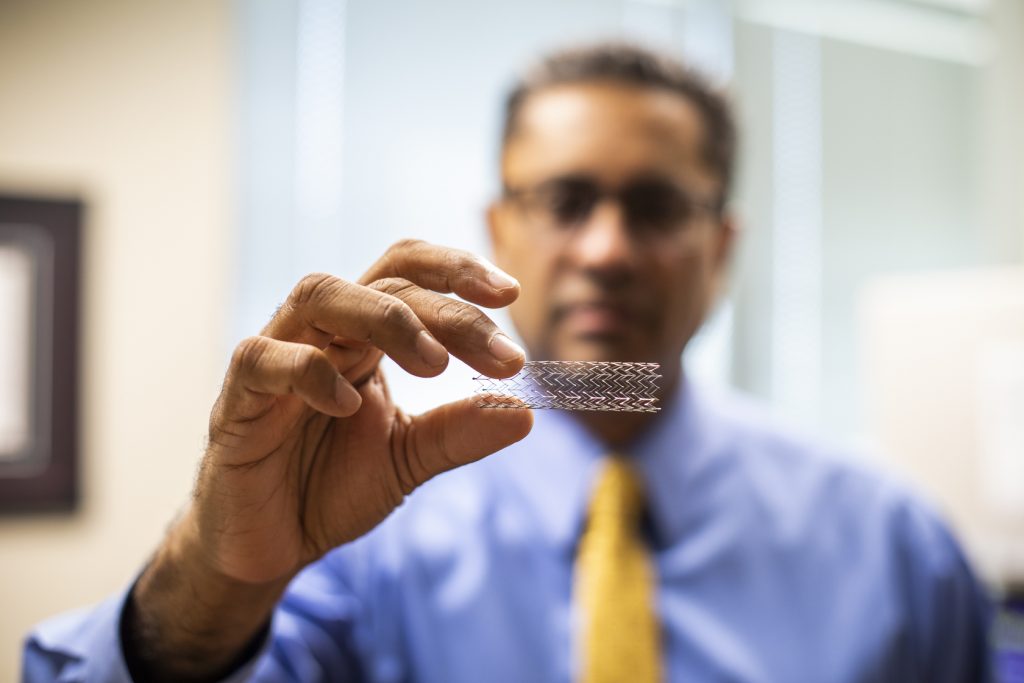
The Chronic Venous Thrombosis: Relief with Adjunctive Catheter-Directed Therapy (C-TRACT) Trial is led by Suresh Vedantham, MD, an interventional radiologist and professor of radiology at MIR. The trial enrolled 225 patients across 29 sites to test whether reopening and restoring blood flow in blocked iliac veins (a major vein located in the pelvis) would reduce post-thrombotic syndrome symptoms. He and his team used a mesh stent to reinforce and expand the blocked iliac vein in an operation that takes two to three hours and requires only tiny incisions. The trial found that the procedure reduced the severity of the post-thrombotic syndrome and improved venous symptoms and overall quality of life in affected patients.
“We see a lot of patients who have moderate or severe post-thrombotic syndrome and have a tough time conducting their daily activities and maintaining a good quality of life. Many patients are unable to walk without pain or work productively,” said Vedantham in a press release. “The condition has been undertreated, in part because there have not been evidence-based options available. This study is the first large randomized trial to show that this is a treatable condition, giving patients meaningful relief from this disease.”
The trial results were published in the New England Journal of Medicine and presented at the Society of Interventional Radiology’s 2026 Annual Scientific Meeting in Toronto.
Read more about the trial from WashU Medicine.