Disease Imaging and Therapy Lab
Projects
Antibodies and Small Molecules for Cancer Imaging and Therapy
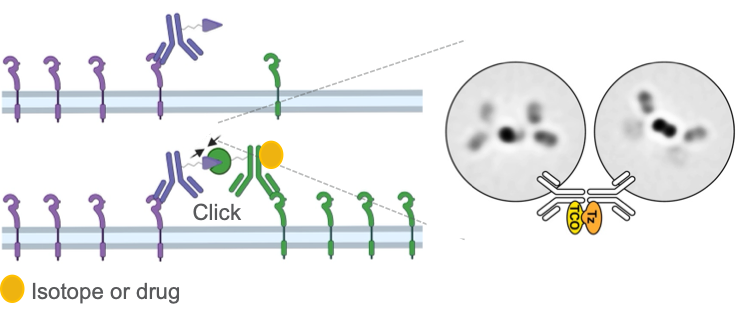
This project develops protein- and antibody-drug conjugates for multi-targeting cancer therapy, performs immunoassays for quality control of the novel conjugates, and investigates their efficacy and mechanisms of resistance in tumors. Our antibody click project focuses on versatile antibody bioengineering for multi-targeting. It addresses critical gaps in cancer imaging and treatment and directly contributes to the advancement of medical imaging approaches. Importantly, this antibody click approach is versatile, making it accessible and practical for widespread use in cancer and other diseases.
PET Imaging to Optimize Combination Therapies for Cancer Treatment
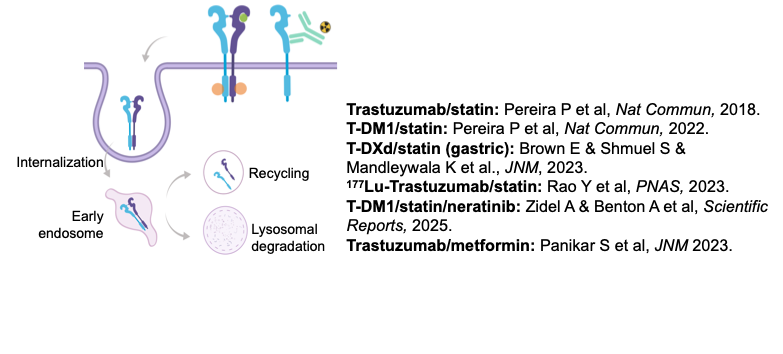
Receptors are not always available at the cell membrane for antibody binding to tumors because they can be masked by other proteins or internalized through endocytic mechanisms. This project explores pharmacologic approaches able to modulate endocytic processes in ways that enhance therapeutic efficacy. Our mechanistic studies showing that cholesterol-depleting drugs (statins) can enhance membrane receptor availability and consequently improve antibody efficacy have provided justification for ongoing clinical investigations of antibody drugs combined with statins.
PET Imaging to Monitor Tumor Response to Therapies
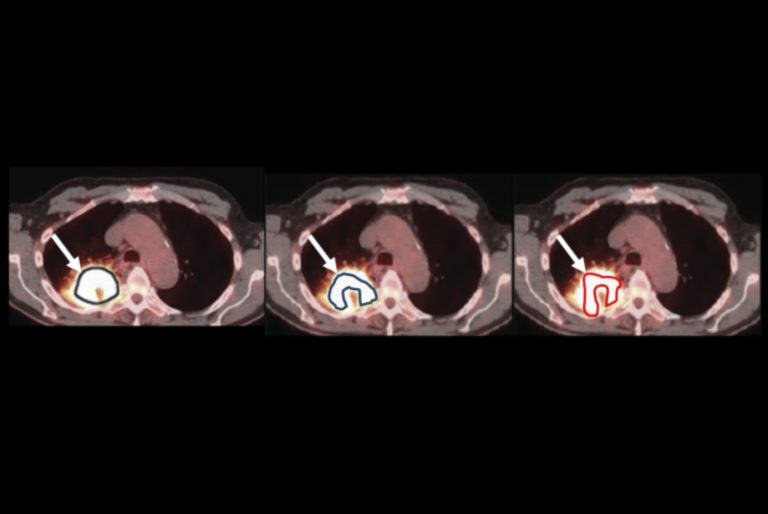
To visualize tumor targets in response to antibody therapies or other targeted therapies, our project uses positron emission tomography (PET), a highly sensitive non-invasive technology that allows whole-body imaging. We correlate the genetic and protein features of tumors with their response to targeted therapies.
Combining Basic Tumor Biology with Preclinical Knowledge and Clinical Needs to Improve Cancer Diagnosis and Treatment
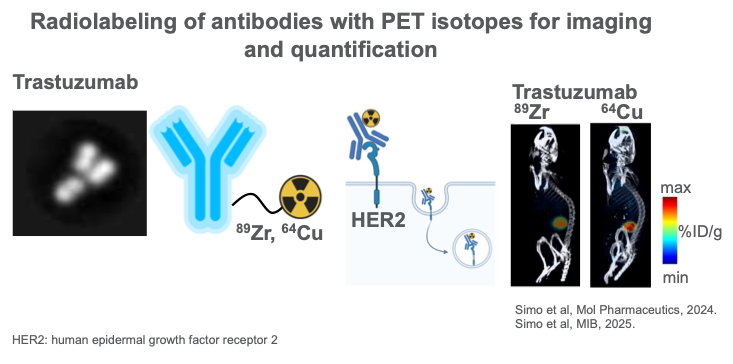
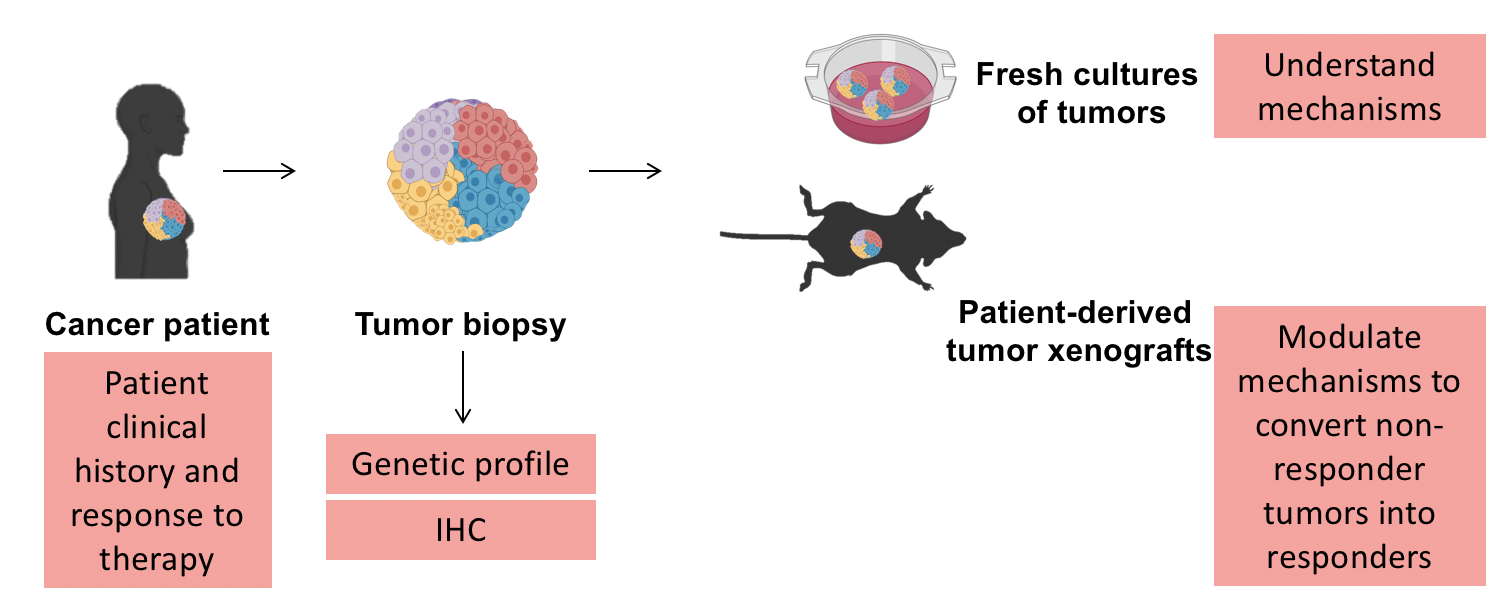
Our lab uses fresh cultures of tumors and patient-derived xenografts (PDXs) to correlate antibody targeting with the respective tumor’s genetic profile and identify genetic features that characterize a non-responder versus a responder tumor. The preclinical discoveries made in our laboratory are combined with retrospective and prospective studies, prioritized and pushed towards clinical translation.
Funding
Funding sources for research from the Disease Imaging and Therapy Lab include the following:
- NIH/NCI MERIT Award, R37CA276498
- NIH/NCI R21CA291680-01
- NIH/NCI, R01 CA244233-01A1
- DeNardo Education & Research Foundation
- Breast Cancer Alliance Young Investigator Award
- Nuclear Medicine Pilot Research Grant in Neuroendocrine Tumors
- Siteman Investment Program
- Cancer Research Foundation Young Investigator Award
- CDD-Siteman QuikSTART Award
- American Cancer Society – Institutional Research Grant
- The Elsa Pardee Foundation
Our People
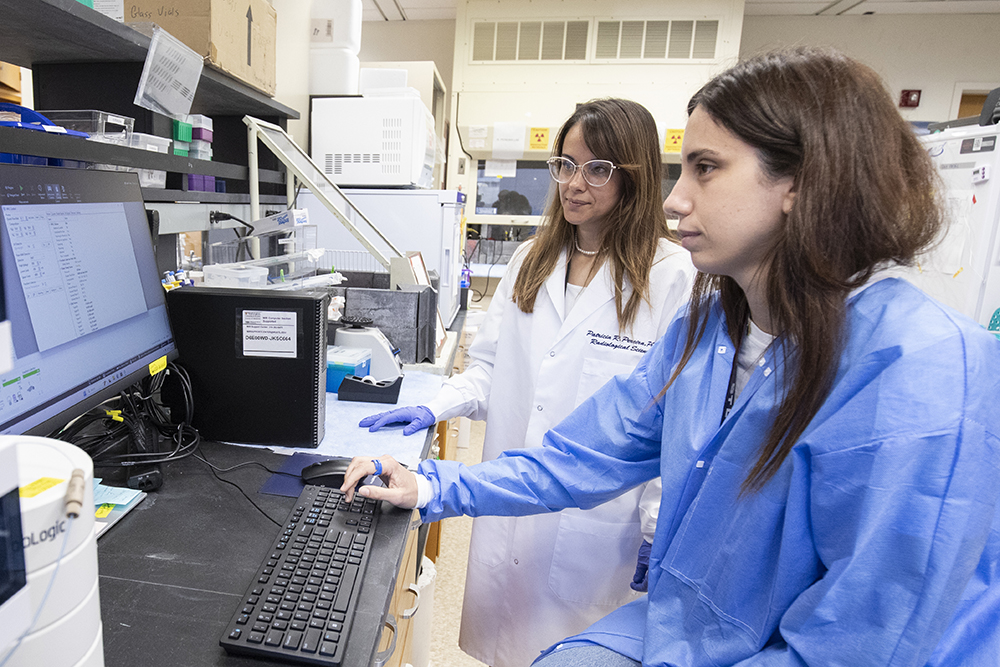
The Disease Imaging and Therapy Lab adheres to a mentoring approach that combines effective communication, excellence in scientific performance, and an inclusive and diverse environment that fosters a collegial and collaborative atmosphere for all lab members.