MIR Researchers Awarded $3M Grants to Advance Radiochemistry
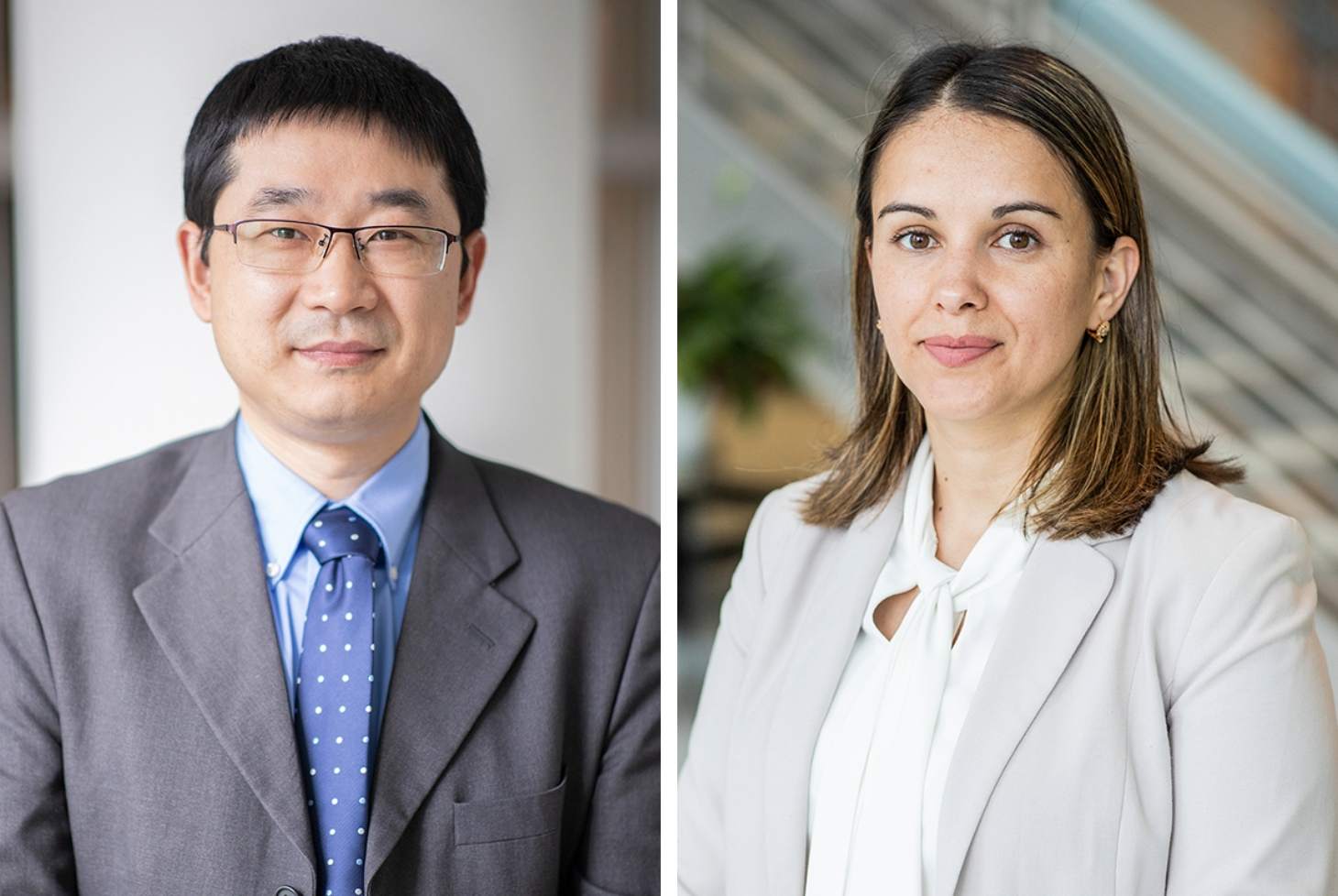
Two WashU Medicine Mallinckrodt Institute of Radiology (MIR) investigators were awarded competitive R01 grants from the National Institutes of Health to advance innovative research in translational radiochemistry. Both faculty members within MIR’s Precision Radiotheranostics Translation Center, their five-year National Cancer Institute awards will support the development of new imaging agents and therapeutic strategies designed to improve cancer diagnosis and treatment.
Developing A PET Radiotracer for the Tumor Microenvironment
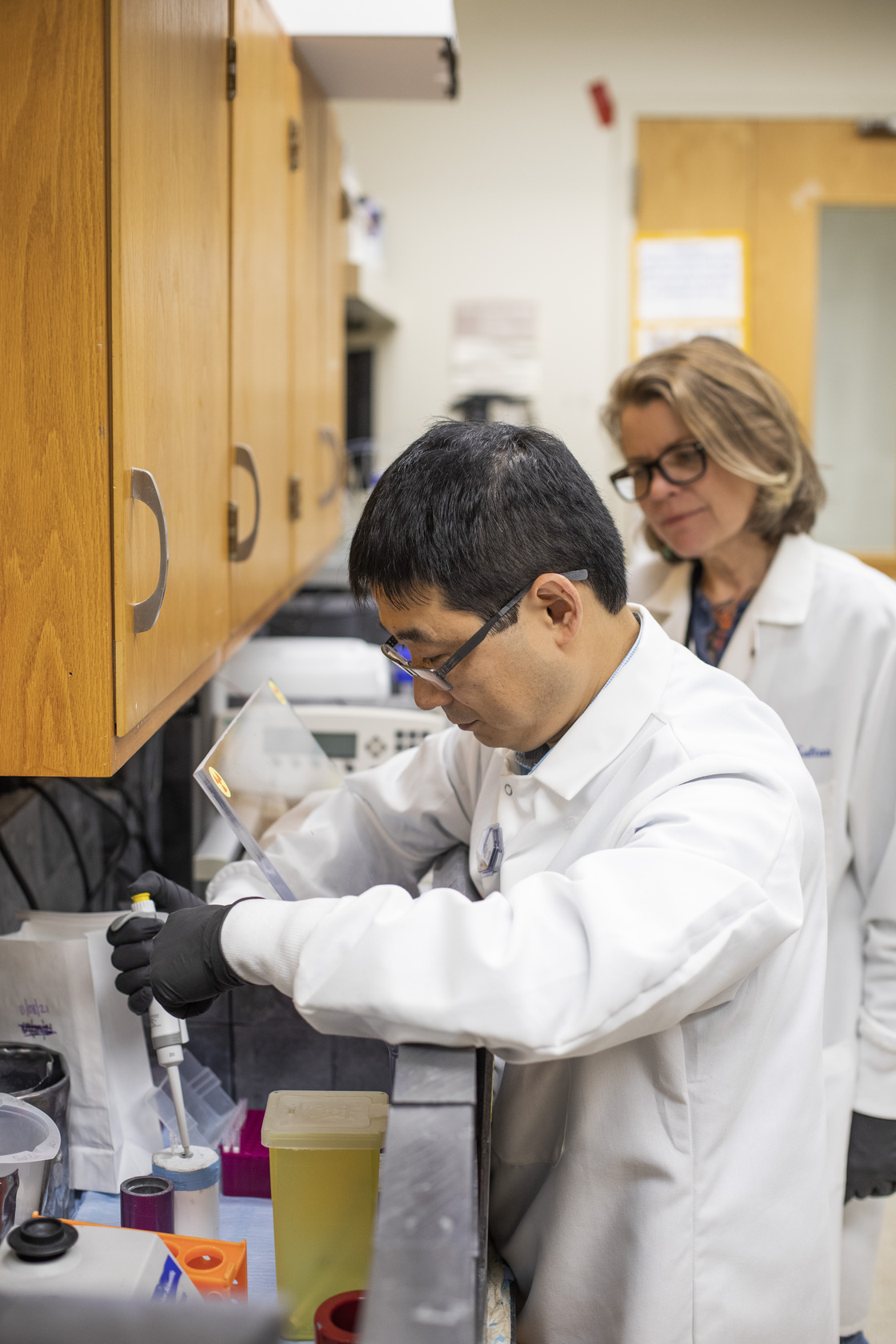
Yongjian Liu, PhD, professor of radiology and principal investigator in the Liu Lab, received a five-year, $3 million R01 grant to develop an imaging agent capable of detecting tumor-associated macrophages in patients.
Tumor-associated macrophages are immune cells that accumulate within many solid tumors and can influence how cancers spread and respond to treatment. Despite their important role in cancer biology, clinicians currently have no proven way to visualize these cells throughout the body using medical imaging.
Liu and his team developed a novel PET radiotracer that targets CD163, a cell surface biomarker strongly associated with tumor-associated macrophages and linked to tumor progression and treatment response. The project will first evaluate the imaging agent in preclinical mouse models before translating the technology for clinical testing in patients with head and neck squamous cell carcinoma. By allowing researchers to noninvasively track these immune cells, the radiotracer could provide valuable insight into how tumors respond to therapy over time.
Improving Treatment Strategies for HER2-Low Breast Cancer
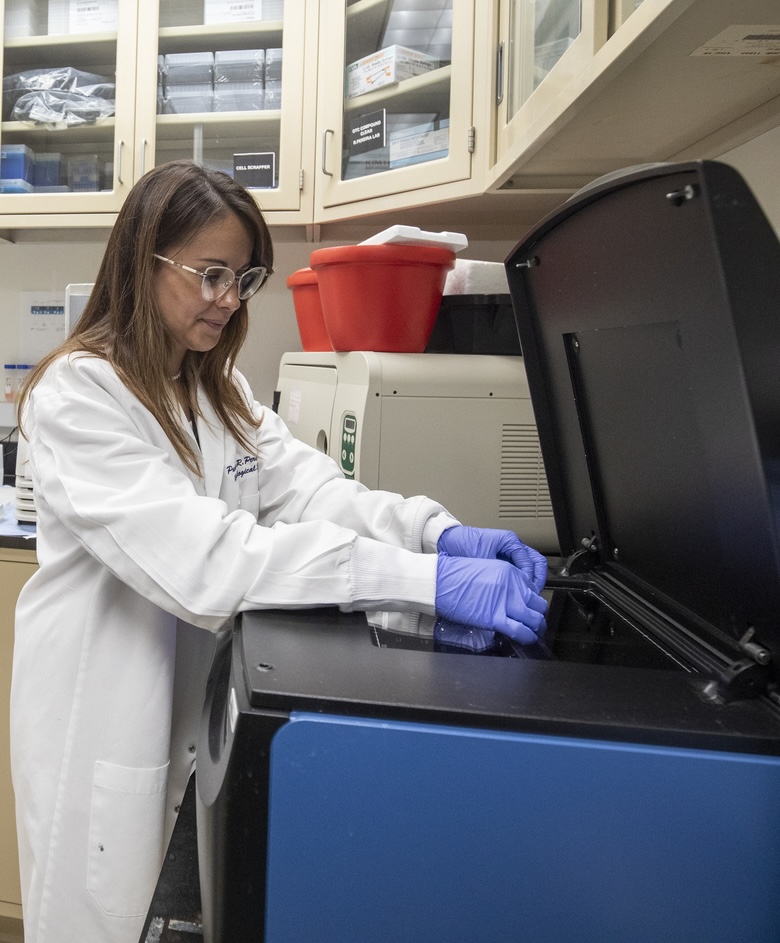
Patrícia M. Ribeiro Pereira, PhD, assistant professor of radiology and principal investigator in the Disease Imaging and Therapy Lab, received a five-year, $3.2 million R01 grant to develop imaging and therapeutic strategies that can identify which HER2-low breast tumors are likely to respond or become resistant to trastuzumab-based antibody-drug conjugates.
Although antibody-drug conjugates have transformed treatment for many patients with advanced breast cancer, most tumors eventually become resistant to these therapies. As a result, researchers are working to identify biomarkers that can predict treatment response, helping patients receive the therapies most likely to benefit them while avoiding unnecessary side effects from ineffective treatments.
Ribeiro Pereira and her team will develop integrated imaging and therapeutic approaches that combine tumor-targeted radiochemistry with advanced spatial and molecular analyses. Their research aims to better understand how cancer cells regulate key membrane targets involved in therapy response and to uncover new strategies for overcoming drug resistance. By pairing innovative imaging technologies with targeted therapeutic approaches, the project seeks to advance more personalized treatment strategies for patients with HER2-low breast cancer and further expand this approach to other tumor types in the future.