Bastiaannet Lab
Projects
Spatially Resolved Microscale Dosimetry Using Integrated Autoradiography and Histological Imaging
Goal
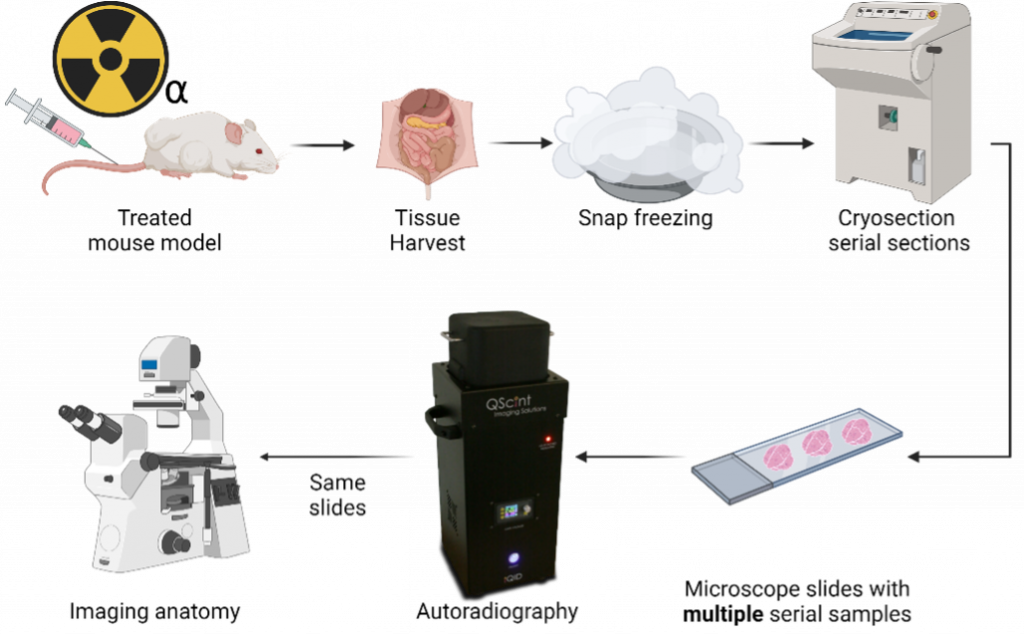
Precise correlation between radiation dose and biological response remains a major challenge in preclinical radiopharmaceutical therapy research, particularly for alpha emitters with highly localized energy deposition. The goal of this project is to develop and validate an integrated imaging pipeline that spatially co-registers high-resolution alpha-camera autoradiography with multiplexed tissue imaging. This integration enables quantitative microscale dosimetry and allows the mapping of dose heterogeneity onto biological features such as immune infiltration, tumor viability and stromal structure.
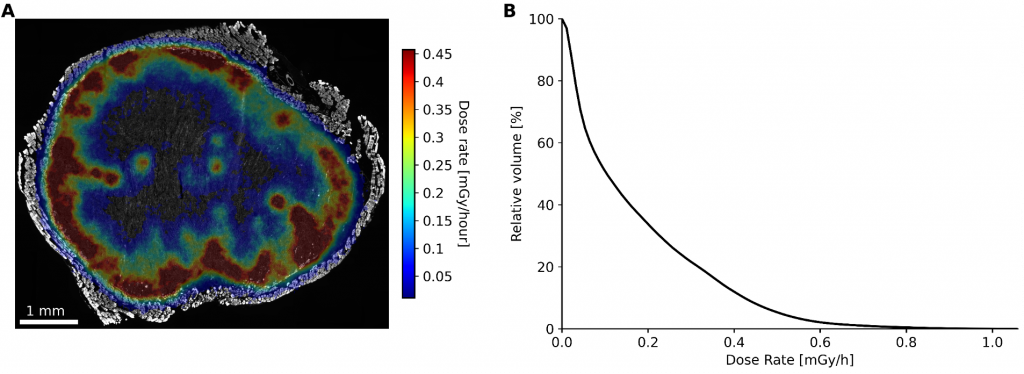
We established a computational framework that combines iQID-based alpha-camera imaging with histological and immunofluorescent tissue analysis. Using image registration, voxelized mapping and spatial statistics, we reconstruct near-cellular dose distributions and associate them with biological markers across tissue sections. This approach enables detailed, spatially resolved analysis of how alpha-RPT reshapes the tumor microenvironment and supports data-driven optimization of targeted therapies.
Stochastic Microscale Dosimetry Using High-Resolution Autoradiography
Goal
Traditional dosimetry methods often fail to capture the inherent stochasticity of radiation energy deposition at the cellular scale, especially for alpha-emitting therapies. The goal of this project is to develop a computational framework for modeling stochastic microscale radiation dose distributions using voxelized autoradiography data, enabling accurate estimation of spatial dose heterogeneity in biological tissues.
Mapping Spatial and Molecular Responses to Alpha-Emitter Therapy
Goal
A critical barrier to improving alpha-emitter therapy is the limited understanding of how targeted radiation reshapes the tumor microenvironment (TME) at both the cellular and molecular level. The goal of this project is to map changes in the spatial organization, cellular composition and signaling landscape of the TME following alpha-RPT, using high-dimensional and spatially resolved profiling techniques.
Our People
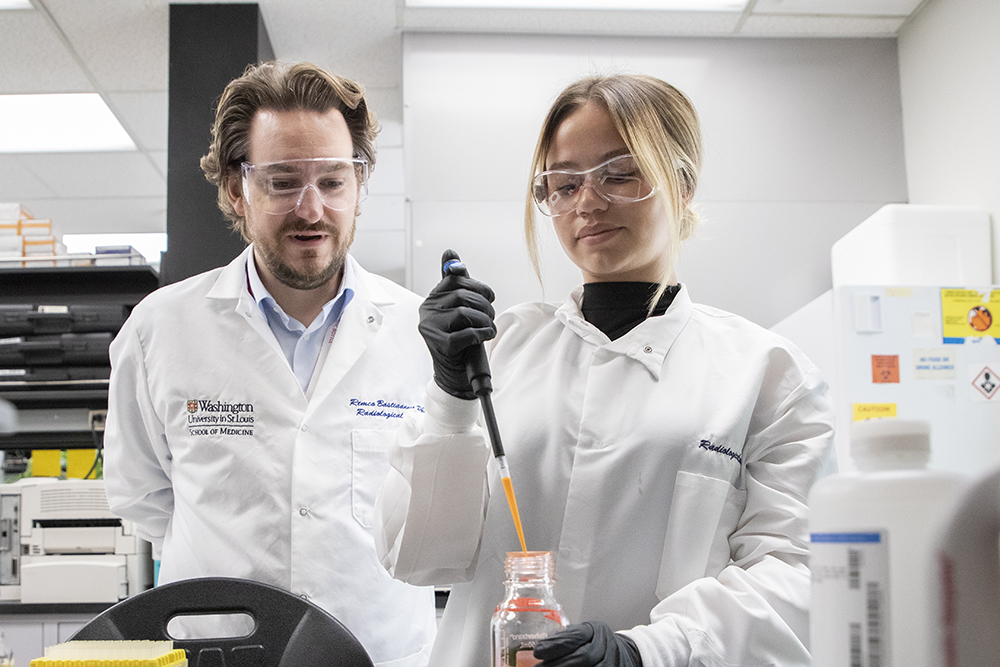
The Bastiaannet Lab, led by Remco Bastiaannet, PhD, brings together a diverse team of researchers with backgrounds in physics, computer science, biology and chemistry, fostering a collaborative environment where cross-disciplinary ideas drive innovation in radiopharmaceutical science.