Neuroradiology
Fellows in neuroradiology receive unparalleled training due to our affiliation with a nationally ranked tertiary medical center, association with a world-class neuroscience institute, partnership with St. Louis Children’s Hospital, and exposure to several community-based hospitals. The ACGME-accredited program rigorously prepares fellows by providing high-level training in inpatient and outpatient adult and pediatric neuroimaging. The neuroradiology section reads over 100,000 cases and performs more than 2,700 procedures yearly, with 100% of cases reviewed with faculty who are recognized experts in their fields. A concurrent fellowship in imaging informatics is available to qualified applicants.
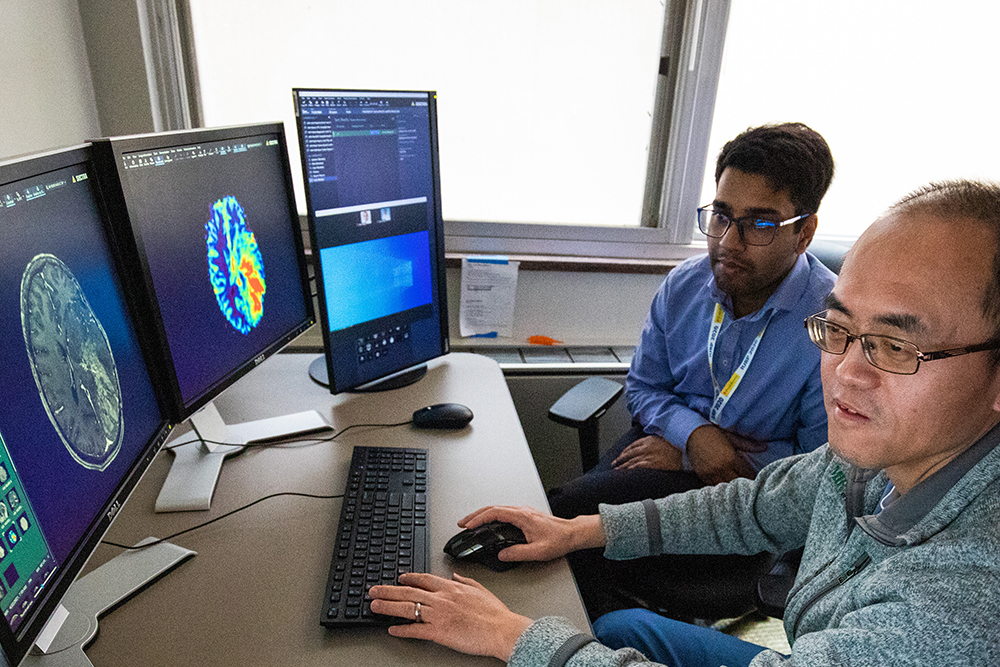
Fellows bound for academic practice may benefit from an optional second year training program. This allows individual time to focus on research or advanced clinical practice in pediatric neuroradiology, head and neck imaging, or advanced neuroimaging. In addition to routine clinical imaging studies, fellows are exposed to a wide range of advanced MRI techniques including functional MRI, tractography, vessel wall imaging, MR perfusion, MR spectroscopy, and PET/MRI. Daily interactive neuroradiology conferences for fellows and a video library of recorded lectures complement the teaching in the reading rooms. MIR maintains a searchable database of proven cases for study and research.


No employees matched your search
- Twelve fellows are accepted into the program per academic year. A second year of research or advanced clinical practice, such as pediatric neuroradiology, is optional.
- Research projects are optional, but a scholarly activity and a PQI project are required.
- Post-training is about 85% private practice, 15% academic.
Dedicated nighttime call rotation performed at home for one week at a time. Separate daytime weekend call. Calls are split evenly among fellows throughout the year.
MIR provides a full diagnostic home work station with full computer functionality through a VPN (access to PACS, Epic, etc). We also offer a wide range of helpful resources and competitive benefits for trainees.
Fellows who maintain full Missouri medical licensure have extensive TELEMIR™ moonlighting opportunities at several BJH locations, either remotely or in person. This allows fellows to supplement their income and at the same time maintain their general diagnostic radiology skills.
1783423F0
Our four-year alternate pathway was created to allow international medical graduates (IMGs) to complete four years of radiology training and become eligible for certification by the American Board of Radiology (ABR). The required four years of training can be accomplished through a combination of annual training in the following programs: neuroradiology, nuclear medicine (two years of training is required), and pediatric radiology.
The neuroradiology fellowship strictly adheres to the rules and regulations of the National Resident Matching Program. Applicants must apply through the Electronic Residency Application Service (ERAS®) website.
Peggy Winkler, Program Coordinator
314-362-5949
Program Director
Matthew S. Parsons, MD
Professor of Radiology
Neuroradiology
MIR’s nationally-recognized team treats patients from throughout the Midwest who experience neurological symptoms and are looking for a precise and quick diagnosis.