

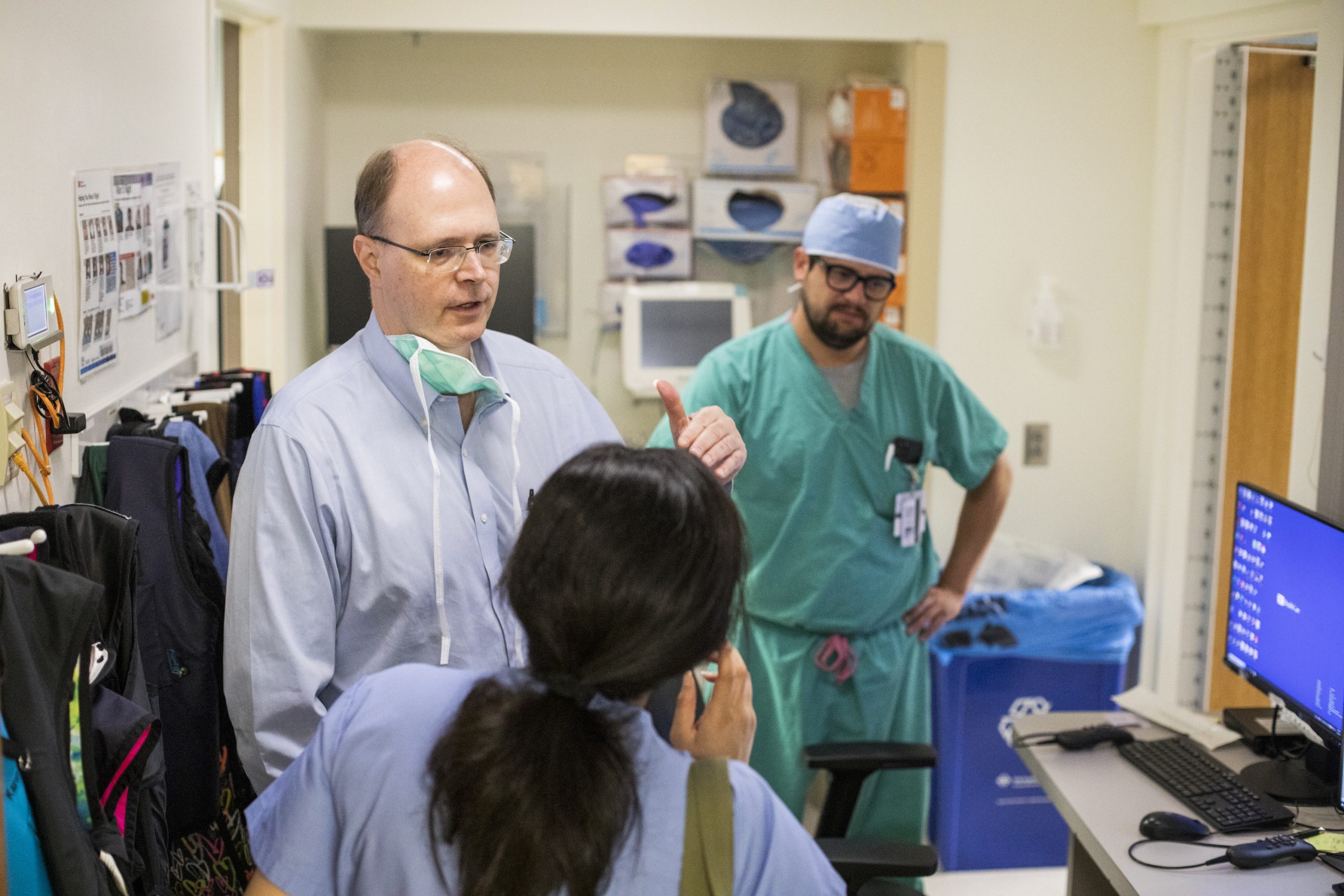
In 2023, Martin N. Reis, MD, was named director of the diagnostic radiology residency program, succeeding Jennifer E. Gould, MD, who held the position since 2006. Now with two match seasons behind him, Reis — associate professor of radiology in the neuroradiology section —reflects on his decision to step into this important role, what he’s learned about guiding future radiologists, and how “radiology is like poetry.”
What were some of your big-picture goals and ideas when you took the role?
One of my main goals was to rebuild the sense of teamwork that may have fallen apart a bit during COVID. I wanted to increase social events and have noon conferences in person again to make people feel like they’re part of a larger team. I also wanted to make the job sustainable by building up a strong team, including bringing on associate program directors and hiring program coordinators.
What do you consider some of your accomplishments so far?
I think the biggest accomplishment was hiring and retaining great program coordinators. That had been a challenge, and getting enough people to help was a huge part of the solution. Another major accomplishment was working with Pam (MIR director Pamela K. Woodard, MD) to cultivate an inclusive culture where there is a foundation of camaraderie and teamwork. Monthly happy hours and social events have been a couple of effective tools to help foster that. We also expanded the number of chiefs to four, with two focused on scheduling, one on social events and one on recruitment.
What has presented the greatest challenge?
The sheer number of emails and information that comes at me. The first year was a big learning curve in figuring out what’s truly important, what can be delegated and what can’t be changed. It’s a cyclical process, so it’s a matter of learning how to do the job and realizing it gets easier over time.
What has surprised you about the role?
I was surprised by how much talking you do. I literally lost my voice in the middle of my first interview season from all the engagement and talking. I was also impressed by how
many interesting ideas are out there and how deeply the faculty is engaged with making the program better.
What are your goals moving forward?
A key goal is to continue to foster an environment that nurtures people of all backgrounds — for our trainees who come here to learn as well as for patients who come here seeking care. We also plan to improve our noon conference curriculum by inviting speakers on wellness and leadership topics. Additionally, an overlooked area we want to address is ergonomics, as we’re seeing more repetitive use injuries due to increased mouse usage. Finally, we are launching a new AI curriculum for residents. It’s designed to give them a practical understanding of how AI tools are built, validated and deployed in imaging. Effectively integrating AI into radiology education is a unique challenge and one we plan
on thoughtfully meeting over the next several years.
What is something most people don’t know about you?
I did an internal medicine residency at UPenn and was a practicing internist for four years before I switched to radiology. I realized I liked the diagnostic aspect of medicine, which is why I tell people to be true to what they want. I also taught ninth and 11th grade English literature at a boarding school before medical school and wrote a senior thesis on Wordsworth and Keats. I believe that high-end thinking in many fields is similar. Radiology is like poetry — it’s all about detail and subtlety, seeing patterns and using higher order thinking.
Published in Focal Spot Fall/Winter 2025 Issue