

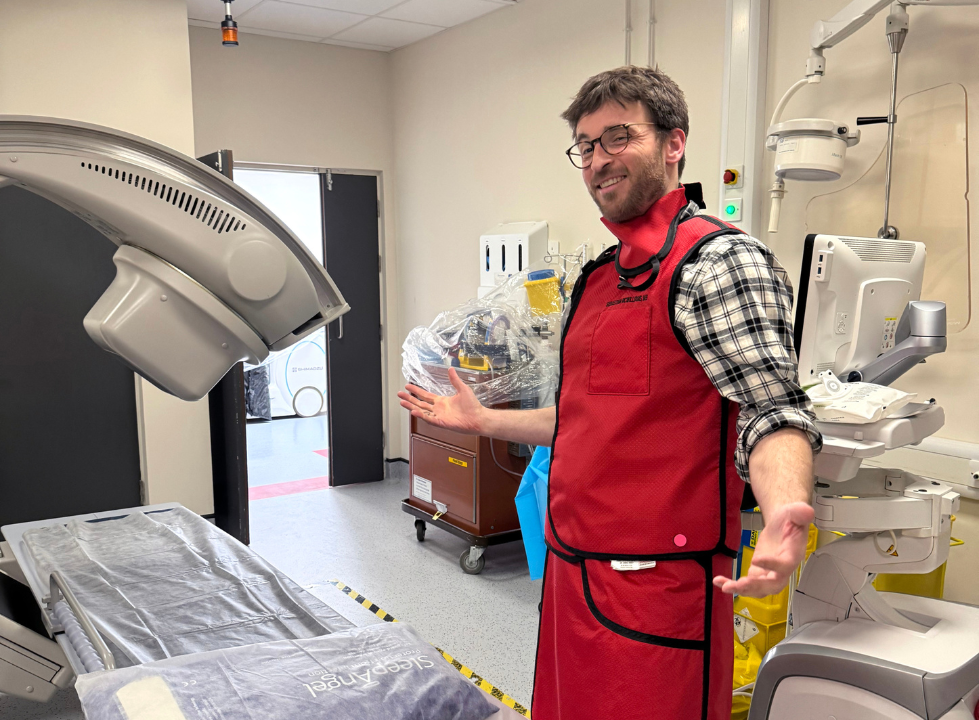
How would you describe your time at MIR?
Jun: I had some challenging years there, and a lot of growth happened as a result. I got to meet and work alongside some talented and cool mentors and co-residents, some of whom I keep in touch with. I like to reminisce about the conversations and humor that occurred in the reading room.
McWilliams: It was the most formative five years of my life in a personal and professional sense. I am so grateful I got that residency because it has given me so many opportunities and is the foundation for my current career.
How did training at MIR prepare you for your career path?

Jun: Taking independent call as a resident helped me gain confidence and autonomy both with interpreting studies and handling any clinical questions that arise.
McWilliams: The breadth of quality teachers at MIR gave me the competence to practice in all areas of radiology, which is essential for telerad. The MIR institutional ethos also shaped me into a professional.
What drew you to teleradiology?
Jun: I realized I needed a better work-life balance and couldn’t see myself working at a typical private practice or academic job and not burning out. I wanted to design my work schedule around my life and not the other way around.
McWilliams: I’m from Ireland and wanted to live in my home country and practice in the U.S. So it was a no-brainer.
What does your typical workday in teleradiology look like?
Jun: I read mostly outpatient chest and body studies with a 24-hour turnaround time. This allows me to have flexibility in my schedule, which is nice for working around appointments, exercise and childcare. I typically start my day with a workout, start work mid-morning around 10 or 11 a.m. and finish roughly by 4 or 5 p.m. I read 45 to 50 cross-sectional studies, mostly CTs. A few evenings a month, I cover urgent ER studies and typically work from 6 to 11 p.m.
McWilliams: I start work at 6 to 7 a.m. and read until 1 p.m., doing overnight cover for hospitals in the U.S. I attend a local hospital some afternoons to practice in a conventional setting.
Have you noticed any impact on patient care since moving into teleradiology?
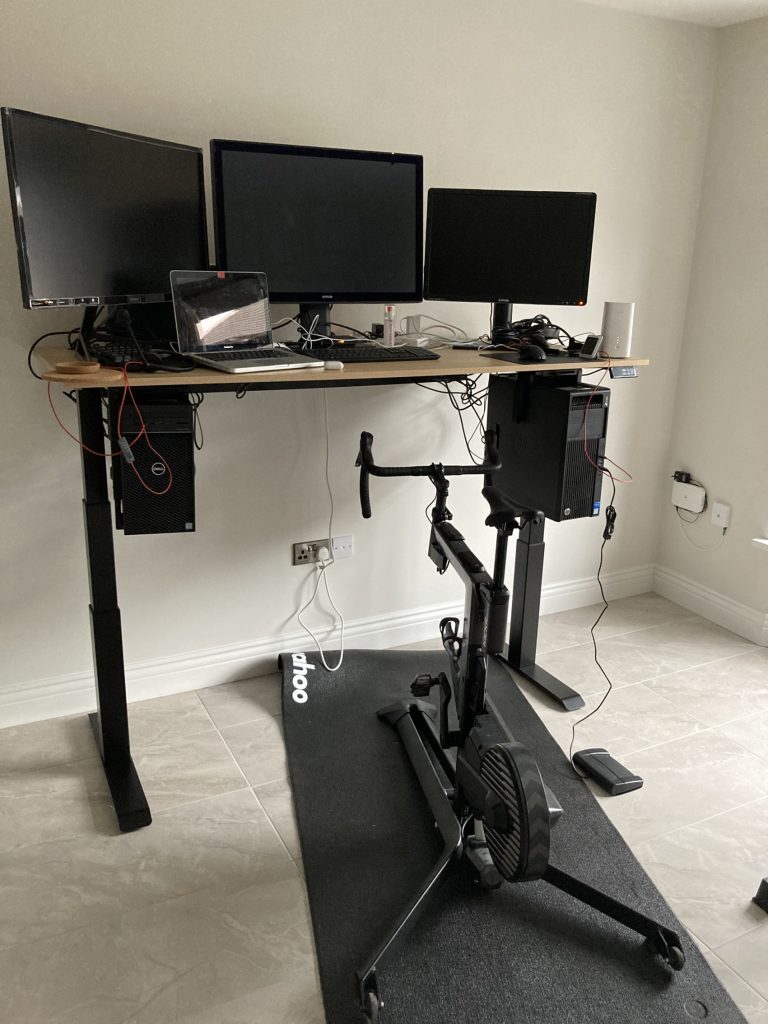
Jun: One of the drawbacks to working remotely is being removed from patients, even more so than what’s typical. The only scenario in which this would make a difference is interpreting ultrasounds, since the option of scanning the patient yourself doesn’t exist. My overall efficiency has improved since I don’t have many distractions, and we have assistants to track down clinicians and histories when necessary.
McWilliams: Doing emergency teleradiology is like reading in the ER at MIR; everything you say is generally important and actionable, whether making a critical finding or reading a negative case. Some think teleradiology is sterile or too distant, but technology can bridge the gap. I feel patient care is enhanced by getting quality and timely reads to those who need them. This applies more generally for all telemedicine.
What advice would you give to those considering working in teleradiology?
Jun: It’s wise to think about what you want out of your life and career when assessing any job opportunity. If flexibility is high on your list in terms of scheduling and location, then teleradiology could be a good fit for you. There are many groups, including academic institutions, offering remote positions. The isolation is real, though; I miss the camaraderie of working with a group of people.
McWilliams: It’s a growing practice model worldwide with huge demand for emergency cover and general outpatient imaging. There are pluses and minuses to all practice types, but the people who thrive in teleradiology are those with a broad skillset and want the flexibility of location and schedule that it can offer.
What are some of your interests beyond radiology?
Jun: Running and working out; playing the piano, guitar and ukelele; spoof writing; and playing chess and other games with my 4-and-half-year-old.
McWilliams: Carpentry and DIY projects, growing vegetables and taking swing and Charleston dance classes.
Published in Focal Spot Fall/Winter 2025 Issue