

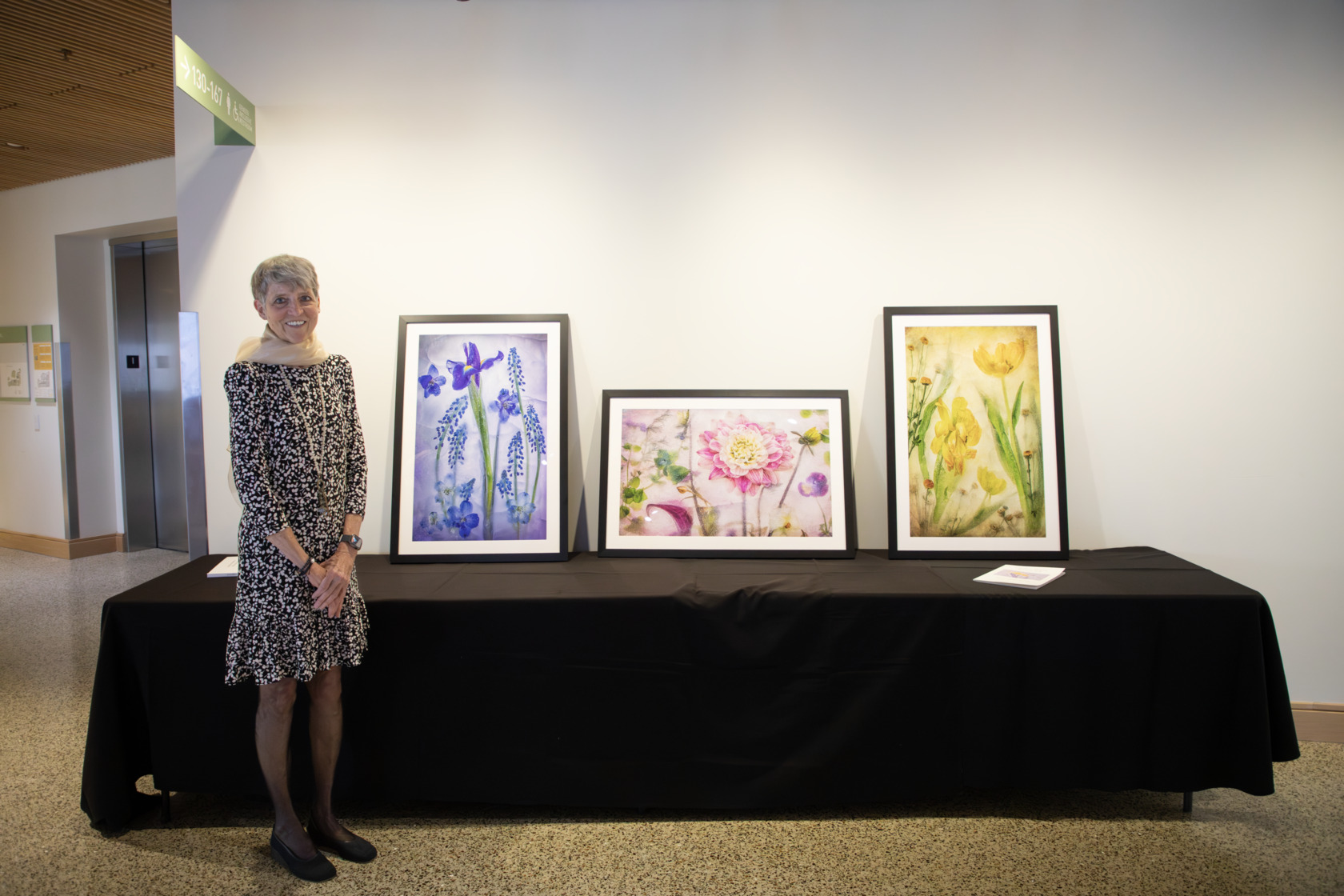
For years, pediatric radiologist Rebecca L. Hulett, MD, found balance outside the reading room in the quiet rhythm of farm life. On a typical Sunday, she was doing something she had done countless times before: driving a pony and carriage on the St. Clair property she shares with her husband, Bob.
No one saw the accident when it happened. Bob found her in the road; the pony and carriage, gone.
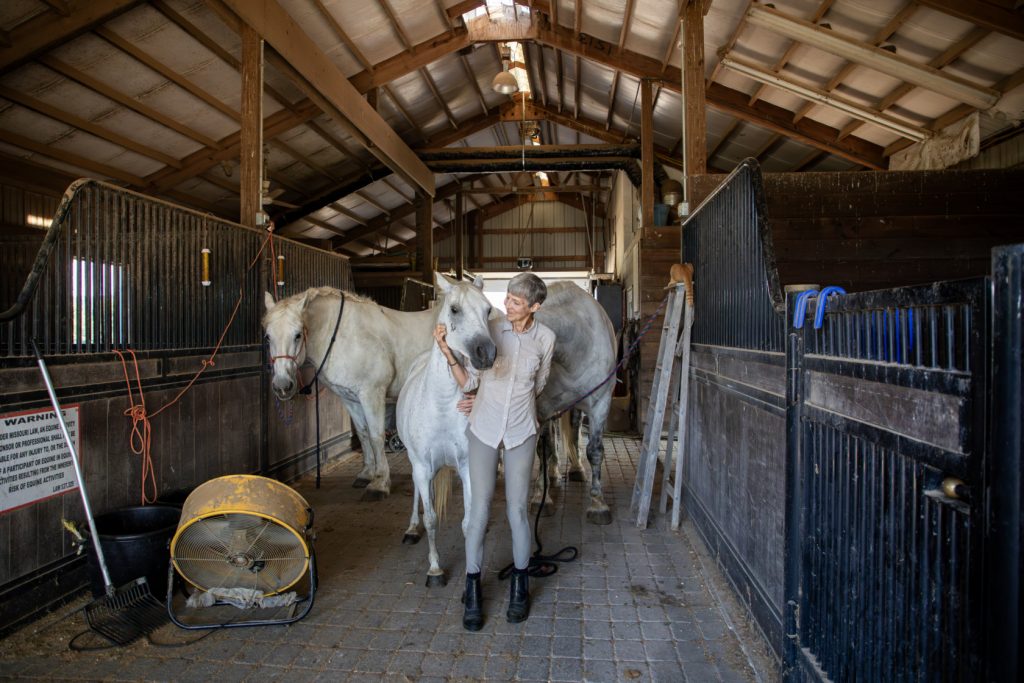
Airlifted to Barnes-Jewish Hospital, Hulett arrived with 17 fractures and a traumatic brain injury. She spent two months in the ICU in the earliest months of the pandemic — no visitors and few certainties. “She may or may not survive,” her fellow physicians told her husband.
When she finally woke up from a medically induced coma, she began the slow, exhausting march back to health: surgeries, dialysis, a tracheostomy, a gastrostomy tube, speech and swallow therapy, neuropsychological testing and months of physical therapy. “I had to learn how to eat and how to talk again,” she said. Seven months after the crash, she returned to work, “astonishing everyone, including myself.”
From Darkrooms to Reading Rooms
In Hulett’s early days of recovery, one of her lifelines was a practice that had been threaded through her life from childhood: photography. She grew up in Ann Arbor, Michigan, the daughter of a pathologist who had a darkroom in the basement and taught her how to develop prints. She carried a camera for the school paper and yearbook, later traveling the world with it.
While medicine called to Hulett more strongly as a practical young adult with a physician for a father, she couldn’t quit her bug for images. A radiology elective opened her eyes to imaging as a career, and after completing training, she served four years as a radiologist in the U.S. Air Force — where she fittingly named her horse “Image.” Eventually, pediatric radiology “found” her during a 16-year tenure at the University of Arizona. She was first hired as a body imager and then was asked to fill a pediatric need.
In time, she met Bob, whose farm in St. Louis seemed to align perfectly with her love of horses and the one place she wanted to work: St. Louis Children’s Hospital. One phone call later, she was home at MIR.
Healing Through Images
After her accident, photography became more than a creative outlet. It was a bridge back to herself. “On the ride home from the rehab facility, I was dazzled by the vibrancy of the surrounding landscape,” Hulett recalled. “I was seeing things differently.”
What had once been a pastime became part of her rehabilitation — a way to exercise her mind without strain and to focus on something beautiful. With encouragement from a mentor, she began freezing flowers, often gathered from her own garden, and photographing them. The process was gentle and restorative, and the resulting photo book, “Flowers in Ice,” became what she considers the most aesthetically successful work of her career.
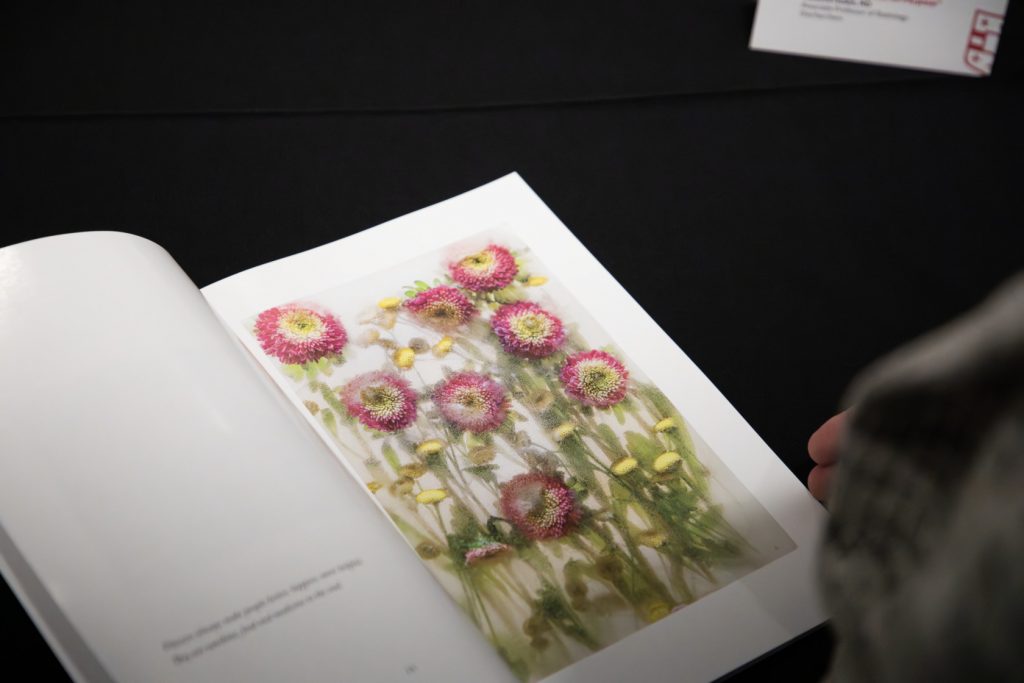
“I now know firsthand the power of art to heal,” Hulett said. “It has become very clear to me that we all need reminding that beauty is everywhere, even in a substance as elusive and impermanent as ice.”
The project also became a way to hold space for grief. Two years after her injury, her 17-year-old nephew died from a seizure. She dedicated “Flowers in Ice” to him and gave a copy to her brother and family at Christmas. “To have something you can look at that’s soothing and beautiful, to know you’re not alone. That’s what I wanted to give them,” she said.
Hulett’s church has since shared the work, and she hopes to make the book more widely available, with proceeds benefiting epilepsy research.
The Physician-Artist
Determined not to let the accident end her career, Hulett underwent intensive neuropsychological testing before being approved to return to work. Today, she reads studies, consults with colleagues, and teaches residents and fellows part-time, working primarily from home.
“I’m very happy with how it’s worked out,” she said. “I don’t want to stop working, and I love to stay connected to my peers in radiology.” Hulett, an associate professor of radiology, has been an MIR faculty member since 2006 and served as program director of the pediatric radiology fellowship for more than a decade.
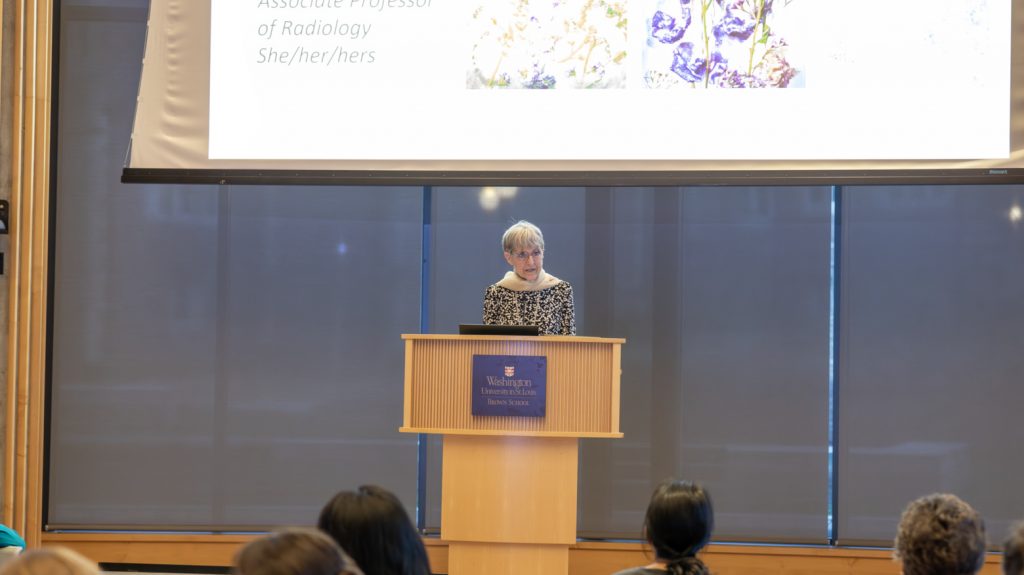
In March 2025, she joined colleagues from across the WashU community for the third annual “In Our Words” storytelling event. More than 120 attendees viewed art and heard stories from 19 presenters who reflected on their identities as health-care researchers, caregivers and students.
In “A New Purpose, Not on Purpose,” Hulett expressed how her identity has expanded since the accident. “I am an equestrian. I am a caregiver. I am a survivor. I am a photographer — and, more so, an artist,” she told the audience.
Hulett’s journey has led her from survival to transformation. “I finally see myself as an artist,” she said. “And I’m especially keen to share my work with others who may need healing.”
To purchase the book, contact Rebecca Hulett, MD.
Published in Focal Spot Fall/Winter 2025 Issue